Cast for over two millennia, Chinese coins with square holes represent a unique numismatic legacy.
Verifying Chinese coins with holes involves analyzing metal composition and script specifics.
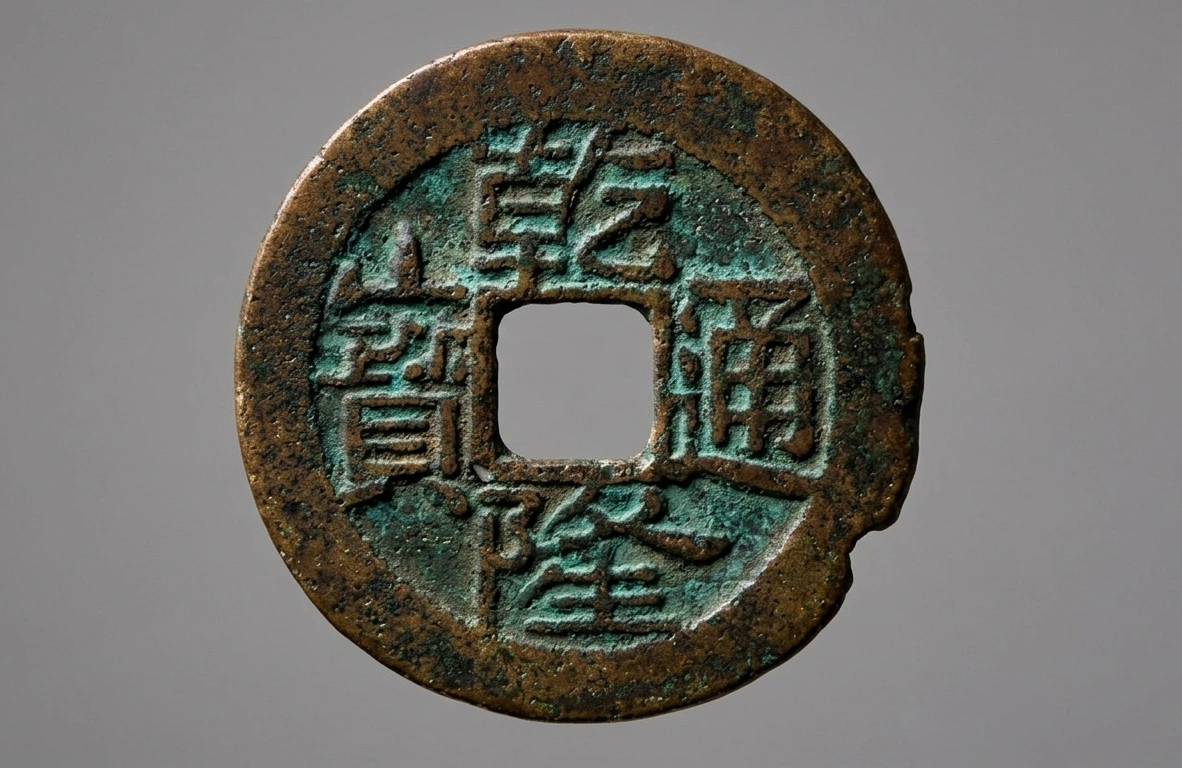
Calligraphy details and edge treatment marks confirm historical accuracy.
Current 2026 market trends show sustained interest in rare Northern Song and Ming dynasty series.
Feature | Authentic Characteristic |
Production Method | Hand-cast using sand or clay molds |
Metal Content | Bronze, Brass, Iron, or Lead |
Hole Edges | Show signs of manual filing and smoothing |
Surface Quality | Natural aging layers and mineral buildup |
Thickness | Inconsistent due to manual manufacturing nature |
Production Technology as a Mark of Genuineness
Ancient mints utilized a casting process involving "mother coins" to create molds.
Extracting the cooled metal from the mold left distinct stubs on the rim.
Removing these protrusions required manual filing with hand tools.
Perfectly smooth or machine-finished edges suggest a modern counterfeit.
Authentic pieces always retain residual traces of abrasive hand-finishing on the rim.
Microscopic inspection reveals tiny pores formed as the molten metal cooled.
Modern replicas made by stamping have unnaturally sharp borders and lack internal porosity.
Calligraphy and Script Typology
Each ruling dynasty introduced specific writing styles for their coin legends.
Master calligraphers often designed the characters used for these currencies.
Major styles based on historical eras:
Zhou Dynasty: Knife and spade shapes used before the hole-coin era
Qin Dynasty: Circular coins introduced with square centers
Tang Dynasty: Standard script used on widespread currency
Song Dynasty: Multiple scripts including Seal and Clerical styles
Proportional errors or simplified characters never occur on genuine ancient coins.
Forgerers frequently struggle with line thickness, making characters appear too bulky.
Studying the script allows for precise dating of the object.
Surface Condition and Aging Layers
Metal aging naturally in soil takes centuries to develop.
Natural processes form a hard, crusty layer of oxides.
Signs of genuine aging:
Structural Bond
Aging layers cannot be removed without damaging the underlying metal
Color Palette
Combinations of dark green, red, and blue tones
Crystallization
Formation of mineral crystals visible via the best free coin identifier app
Artificial aging often involves applying paint or quick acid etching.
Fake aging layers scrape off easily with a fingernail and smell strongly of chemicals.
Genuine ancient bronze lacks a bright metallic shine beneath its crusty exterior.
Rare Specimens and 2026 Market Performance
Values for Chinese coins depend on the rarity of the reign title and preservation level.
Coin Type | Dynasty | Weight | 2026 Record Price |
Gold Variety | Tang | 4.2 grams | $15,400 |
Rare Variety | Northern Song | 3.8 grams | $2,100 |
Commemorative | Ming | 5.5 grams | $4,800 |
Large Cash | Qing | 12.5 grams | $850 |
Statistical data indicates a 7% annual value increase for rare types with certificates.
Common Qing dynasty coins priced at $1-$5 hold no significant investment potential.
Step-by-Step Verification Method
Testing involves several diagnostic stages to ensure accuracy.
Sound Test → Authentic bronze produces a dull, short "clack" when dropped on a hard surface.
High-pitched ring → Suggests high zinc content or modern steel-based alloys.
Weight Measurement → Matching historical mass standards for specific time periods.
Hole Inspection → Corners should be sharp but show rounding from cord wear.
Script Comparison → Cross-referencing characters with museum catalog rubbings.
Air Bubble Detection → Bubbles on the flat surface indicate modern casting methods not used in antiquity.
Comparing Originals to Fakes
Distinctions become obvious when comparing specific details.
Feature | Ancient Original | Modern Fake |
Character Relief | Smooth transition to the coin field | Sharp "stamped" edges |
Aging Layer | Deeply bonded, multi-layered | Surface coating or paint |
Geometry | Slight natural asymmetry | Perfect circles and centering |
Scent | Earthy and neutral | Sour or chemical smell |
2026 Market Dynamics for Antique Lots
Market volatility depends heavily on the auction platform used.
Fake items account for nearly 85% of listings on unverified online sites.
Purchasing power in the top-tier rarity segment grew by 12% in the latest period.
Demand for coins in Extra Fine condition is rising faster than other categories.
Investors favor specimens with documented histories from established collections.\
Factors Reducing Authentic Worth
Metal cracks or aggressive cleaning marks significantly lower market value.
Removing the natural aging layer destroys the coin's protective skin and historical look.
Primary defects impacting price:
Deep corrosion → 60% price reduction
Solder marks → 80% price reduction
Edge shaving for metal theft in antiquity → 30% price reduction
Authentic coins with these flaws still trade higher than modern copies.
Regional Variations in Production
Provincial mints often utilized simplified or cruder molds.
Southern province casting quality sometimes fell below capital standards.
Lower standards led to coins with blurred or faint characters.
Identifying these specimens requires specialized knowledge of regional calligraphy.
Capital issues always exhibit higher levels of detail and finish.
Certification Impact on Liquidity
Professional grading by GBCA or ACG provides a guarantee of genuineness.
Coins in plastic holders sell for 25% more on average than raw specimens.
Grading includes laboratory analysis of the metal alloy.
Presence of specific trace minerals found in ancient mines confirms age.
In 2026, buyer confidence in certified holders remains at an all-time high.
Rules for Safe Acquisition
Avoiding random sellers minimizes the risk of buying fakes.
Utilizing high-quality catalogs allows for side-by-side comparison of die details.
Recommended actions before a purchase:
Verify weight to 0.05-gram accuracy
Inspect macro photographs of the coin surface
Request a certificate of authenticity
Inspect the coin via a coin identifier online
Check seller ratings on numismatic community blacklists
An authentic coin always appears natural for its age category.
Evolution of the Square Hole Shape
Size and precision of the central window changed as technology improved.
Tang era holes feature clean geometry with a slight inward slope.
Ming period coins often have larger holes relative to the total disk diameter.
Deviation from these standards signals a need for further scrutiny.
Central holes served for stringing coins into bundles of 1000 pieces.
Decades of friction against hemp cords left specific wear marks inside the hole corners.
Missing wear on an otherwise heavily circulated coin raises suspicion.
Popular

Dive into the dynamic world of tourism technology, exploring how location-based services are revolutionizing travel. Discover strategies for leveraging this tech to enhance traveler experiences, boost...

Discover powerful strategies to grow your wealth in 2024! From bonds and mid-cap stocks to real estate and tax-advantaged accounts, learn how to build a diversified, tax-efficient portfolio. Read Inve...

Discover key investment trends for 2024 that can help build a future-proof portfolio. From diversification and ESG criteria to tax-efficient strategies and continuous learning, find out how to stay ah...